

Off Grid
25+ Homestead Hacks That Will Make Life Easier

Most homesteaders start their homesteading journey because they want to live a simple, self-sufficient life. But this easy way of life isn’t always easy.
Fortunately, there are tons of homestead hacks that will save you money and save time – and your sanity!
Check out the list below and see which homestead hacks and tricks you can implement.
1. Keep Everything
Homesteading involves following a “waste not, want not” mantra.
Make a point to never throw anything away until you are absolutely sure there is no other way to use it.
Beyond food scraps for compost, hold on to any wood and plastic.
You can recycle these and use them to make other homestead essentials, such as pallet gardens, chicken coops, and animal feeders.
[Related Read: How to Reuse Everything on Your Homestead]
2. Pair Animals Appropriately
You can save yourself a lot of time and heartache if you think carefully about how you house the animals on the homestead.
For example, there are some pairings that work better than others.
Cows tend to pair well with all livestock. But pigs can be difficult to pair with certain types of livestock since they are omnivores.
3. Grow Vertically for More Space
If you are limited on space on your homestead, try growing vertically.
Put together a simple vertical frame or higher stakes and harvest dirt-free produce.
4. Make Your Own Compost
Compost is essential for adding nutrients to your garden. Instead of buying compost, make your own.
You can go with a traditional compost pile, or you can embrace vermicomposting (worm composting).
This homestead hack will eliminate excess garbage, enrich your soil, and save you money.
5. Extend Your Growing Season
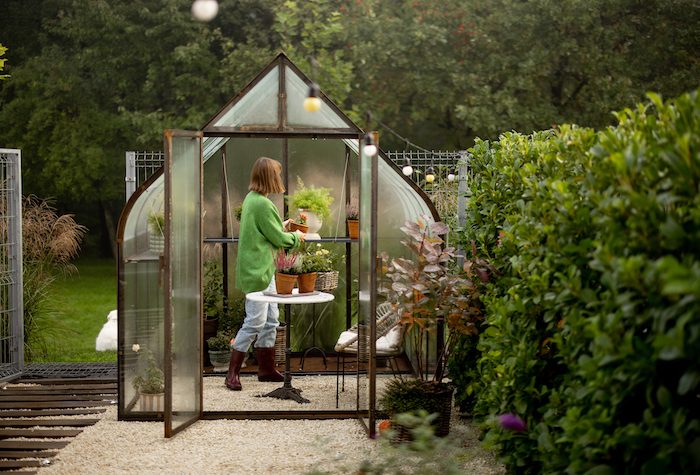
Unless you live in an environment where the weather is conducive for growing year-round, it is helpful to learn homestead hacks for extending your growing season.
You can use homemade cloches (we’ll tell you how to DIY those later), use row covers, or utilize a greenhouse.
Another option is to learn how to warm up the soil using black tarps to plant early in the spring.
6. Remove Labels from Jars
Homesteaders should try to reuse everything. One such thing is jars for canning.
The problem is the sticky labels. The homestead hack is to use water to remove the paper label and a safe oil (such as grapeseed) to remove the adhesive.
7. Help Dough Rise Faster
Need a loaf of fresh bread sooner rather than later?
One homestead hack is to create your own “proof box” by placing a bowl of steaming water in the oven with your bowl of dough.
Your DIY proof box works by making it humid and warm so the dough can rise faster.
8. Use a Mason Jar as a Liquid Measuring Cup
Put your mason jars to even more use in the kitchen by using them as a liquid measuring cup.
- 1 cup = 1/2 pint jar
- 2 cups = pint jar
- 4 cups = quart jar
- 8 cups = half-gallon jar
Say you need 6 cups of water. You could fill a half-gallon mason jar and fill it up three-fourths.
9. Peel Hard-Boiled Eggs with Ease
This homestead hack will save you a ton of time. If you have chickens on your homestead, you’re going to eat a lot of eggs.
One popular way is hard-boiled, but peeling hard-boiled eggs can be a pain.
The trick is to steam them – not boil them.
- Place eggs in a colander (not plastic) and place the colander in a pot.
- Put water in the pot, but not enough to submerge the eggs.
- Bring the water to a boil and put a lid on the pot.
- Allow the eggs to steam for about 20 minutes.
- Rinse with cold water.
- Now peel.
10. Save Money Shopping at the Dollar Store
Save money by shopping for essentials at your local Dollar Store. You can typically find items such as sewing needles, plastic buckets, freezer bags, and clothespins.
11. Keep Pests Away from Fruit Trees
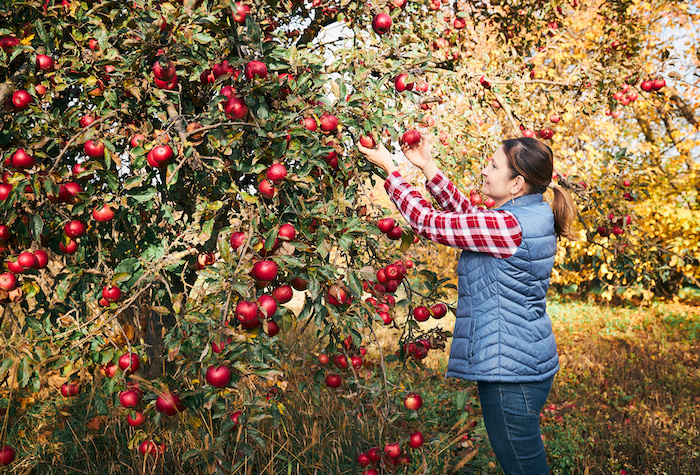
If you have fruit trees, you will have to battle squirrels and birds from enjoying the fruit before you do.
Unless you use this homestead hack.
Hang old CDs and DVDs from the tree branches.
These will create prisms, and the sun will reflect off them, which will encourage these pests to stay away.
12. Protect Water Sources from Bugs
Bugs are drawn to water.
If you have small areas of standing water, such as bird feeders or water barrels, add vegetable oil to the water.
The vegetable oil will create a film over the surface and will prevent insects from enjoying it.
13. Make Your Own Garden Markers
Garden markers are a must if you are growing various plants.
Make your own garden markers to easily distinguish one plant from another.
One simple solution is to place the seed packet inside an upside-down mason jar. This saves the details and works as a marker.
14. Fertilize a Plot with Your Own Livestock
If you have poultry on your homestead, take advantage of their manure.
Create a temporary pen for your chickens or ducks in the space where you’d like a plot.
Keep them there for a couple of weeks, and they will fertilize the plot.
15. Make Your Own Homemade Mulch
Use mulch in your garden to prevent weeds.
But instead of buying mulch, make your own.
You can use shredded newspaper, animal manure, or cardboard as mulch.
16. Use Beer to Repel Pests
Have a problem with snails or slugs?
Fill a small dish with beer and put it near the area they like to destroy.
They will make their way to the beer and be unable to get out of the dish.
17. Preserve Fresh Herbs
You can always have fresh herbs on hand if you know how to preserve them.
It’s simple.
Simply chop them up and place them in ice cube trays topped with olive oil. Then freeze.
18. Protect Tools from Rust
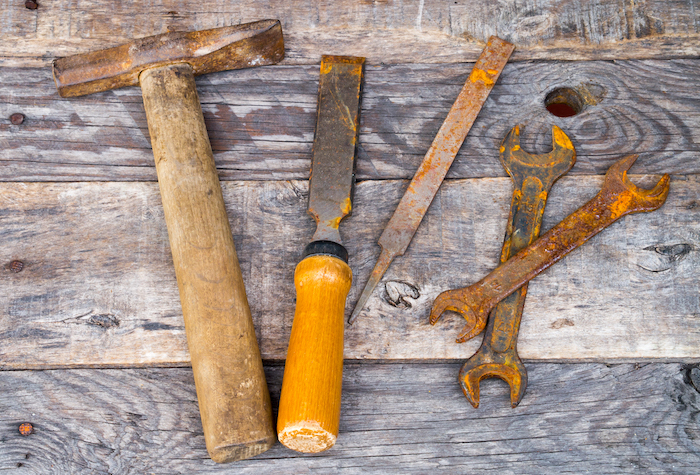
Sand and mineral oil work to protect tools from rust.
But instead of constantly having to clean your tools, fill a bucket with sand and mineral oil and use this bucket as storage.
19. Follow Companion Planting
Make your garden grow well by following companion planting.
Certain plants work especially well together – enhancing growth and protecting from pests.
For example, plant tomatoes with marigolds.
[Related Read: Garden Building: Sun Mapping and Companion Plants]
20. Use Cinnamon Liberally
In addition to using cinnamon for its delicious flavor, it has many other uses around the homestead.
For example, use some cinnamon to repel pests.
Put cinnamon on your cuttings to prevent mold.
Add cinnamon to your waterers to protect your livestock from illnesses.
21. Make DIY Animal Feeders
You can save a good bit of money by making your own animal feeders.
If you have something plastic to hold and carry the feed and a PVC elbow joint, you can quickly and easily make your own feeder.
All you have to do is drill a hole where you will affix the elbow joint(s).
22. Collect Sawdust
Sawdust has many uses on the homestead.
That’s why it is necessary to get to know people in the business (woodworkers, foresters, etc.) and see if you can get their sawdust.
Try bartering produce or eggs for sawdust.
23. Make a DIY Cloche
A cloche protects plants from frost.
You can make your own using an empty soda bottle.
Simply cut the soda bottle and place it over the plant in the evening.
Remove it in the morning.
24. Get Rid of Squash Bugs with Tape
If you’re having a problem with squash bugs invading your garden, you need to get rid of the eggs before you have a total infestation.
The homestead hack is to use packing tape.
Find the leaves where the eggs are located, place packing tape on the eggs, and pull the tape off to remove the eggs.
25. Freeze Extra Eggs
Don’t let your fresh eggs go to waste!
When you have extra, crack the eggs into a muffin pan.
Place the muffin pan in the freezer.
Once frozen, remove them from the pan and place them in a container for freezer storage.
26. Teach Chickens to Come When Called
If you use the same word or sound combination when you feed them, they will learn to associate this word with coming to you.
Source link: https://survivaljack.com/2023/01/25-homestead-hacks/ by Survival Jane at survivaljack.com
Emergency
The Grid-Down Nightmare: One Strike from the Sky Could End America As We Know It

North Korea’s Quiet Threat Isn’t Nukes on Cities… It’s Nukes in Orbit
Kim Jong Un doesn’t need to hit Manhattan or Los Angeles to cripple America. He just needs one small nuclear warhead detonated 200 miles above the heartland. No fireball. No mushroom cloud. Just a burst of invisible energy (an EMP) that fries every unshielded circuit in the continental U.S. Former Congressional EMP Commission Director Dr. Peter Pry issued stark warnings before his death in 2022: North Korea’s test launches of high-altitude ballistic missiles were not accidents… they were dry runs for an electromagnetic strike. And he wasn’t alone. DHS and DOD jointly confirmed: “EMP events have the potential to permanently damage electrical components and entire systems within most critical infrastructure sectors.”The Real Apocalypse Isn’t a Bomb—It’s the Blackout That Follows

Rogue States and Nonstate Actors Are Watching… and Waiting
North Korea is the headliner, but they’re not the only threat.- Iran has launched satellites capable of reaching EMP altitude.
- Russia has maintained and modernized electromagnetic pulse weapons as part of its strategic arsenal.
- Nonstate actors, including terrorist organizations, could hijack or detonate a stolen warhead using commercial satellite launch tech.
- Even solar storms, like the Carrington Event of 1859, could mimic the effects of an electromagnetic pulse on a global scale, and we’re overdue for one.
The Government Knows. But You’re Still On Your Own.
In 2020, then-President Trump issued an executive order prioritizing EMP preparedness, directing the Department of Homeland Security and Department of Defense to study the threat. He later promised to build a U.S. version of Israel’s “Iron Dome” to protect the homeland from high-altitude missile attacks. That was years ago. What’s happened since? Nothing. The grid remains exposed. Emergency systems are still vulnerable. Most Americans remain completely unaware that their entire way of life could end in milliseconds. Even DHS admits: EMP shielding for civilian infrastructure is “too expensive and impractical”—translation: you’re on your own.When the Lights Go Out… All Hell Breaks Loose

- Grocery stores are looted.
- ATMs and banks are useless.
- People begin turning on one another for fuel, food, and water.
- Urban riots erupt. Rural areas isolate and arm up.
- Water stops flowing.
- Sanitation systems fail.
- Diabetics can’t refrigerate insulin. Infants can’t get formula.
- Your neighbors – once friendly – start getting desperate.
A Perfect Kill Shot – And America Has No Defense
It doesn’t take a superpower. It just takes a satellite – or even a balloon – with the right payload. The Chinese spy balloon that floated over U.S. airspace in early 2023? That was a proof of concept. Now imagine that balloon carrying a small nuke. Detonated at high altitude, it wouldn’t destroy a city—it would kill the grid across half the country. And unlike conventional war, you don’t get a second chance. There is no recovery window. Once the lights go out, they may never come back on.The Time to Prepare Is Yesterday
This isn’t about paranoia. It’s about realism. Experts have said it. The government has confirmed it. Rogue states have rehearsed it. The next attack on America won’t be on a city. It’ll be on our infrastructure. If that day comes, the only question left is: Are you ready to survive in a world that just got sent back to the 1800s? When the lights go out – whether from an electromagnetic pulse, cyberattack, or natural disaster – your lifeline to the outside world could be gone in an instant.
Emergency
When Disaster Strikes: Your Ultimate Survival Guide

Disasters don’t send a warning. They can happen anytime, anywhere, leaving us scrambling to figure out what to do. Whether it’s a sudden storm, an earthquake, or getting lost in the wild, the key to survival is simple: be prepared. That’s where our FREE book “When Disaster Strikes” comes in.
This guide isn’t just for adventurers or experts—it’s for everyone. No matter where you live or your experience level, this book teaches you the skills and mindset you need to protect yourself and your family during an emergency.
Let’s take a closer look at what makes “When Disaster Strikes” a must-read for anyone who wants to stay safe when the unexpected happens.
Why Mindset Matters Most
The first lesson in the book is clear: survival isn’t just about skills and gear. It’s about your mindset. Staying calm and focused can mean the difference between making smart choices and putting yourself in danger.
In stressful situations, fear and panic can take over. “When Disaster Strikes” explains how to overcome these feelings by staying positive and breaking problems into smaller steps. It teaches you how to stay hopeful, even when things feel overwhelming.
The “SURVIVAL” Acronym

A big part of the book is the SURVIVAL acronym, which breaks down the key steps to staying safe. Here’s what it stands for:
- S – Size Up the Situation: Look around, check your surroundings, and stay alert. Know what’s happening and plan your next move carefully.
- U – Use All Your Senses: Think before you act. Rushing into a decision can waste energy or make things worse.
- R – Remember Where You Are: Pay attention to landmarks, use maps, and keep track of your location.
- V – Vanquish Panic and Fear: Stay calm and focus on solutions, not problems.
- I – Improvise: Use the resources around you to solve problems creatively.
- V – Value Your Life: Stay determined. Remember, the will to survive is your greatest tool.
- A – Act Like the Natives: Learn from animals or local people about where to find food, water, or shelter.
- L – Live by Your Wits, Learn Essential Skills: Practice survival skills now so you’ll be ready when you need them.
Essential Survival Skills

“When Disaster Strikes” is full of easy-to-follow tips for building your survival skills. Here are a few highlights:
Finding Water
Water is your top priority in any emergency. The book explains how to find natural water sources like rivers or rainwater. It also teaches you simple ways to purify water, such as boiling or using a filter.
The Essentials Tools for Survival: What You Need to Know

Building Shelter
Shelter protects you from the weather and keeps you safe. The book shows you how to build simple shelters using what’s around you—like a tarp, branches, or even snow.
Starting a Fire

Fire isn’t just for warmth. It’s useful for cooking, purifying water, and even signaling for help. You’ll learn how to start a fire with tools like matches, lighters, or even sticks and stones.
Food in the Wild

When food is scarce, knowing what’s safe to eat is critical. “When Disaster Strikes” covers:
- Edible Plants: How to identify plants that are safe to eat.
- Catching Fish: Tips for fishing with simple tools like spears or nets.
- Insects as Food: Why bugs can be a great source of protein (and how to make them more appetizing).
The book also warns about poisonous plants and shows you how to avoid them.
Signaling for Help
Sometimes, the fastest way to survive is to get rescued. “When Disaster Strikes” teaches you how to:
- Build signal fires that can be seen from far away.
- Use mirrors or flashlights to reflect sunlight and catch attention.
- Spell out SOS using rocks, logs, or anything visible from the sky.
First Aid Basics
Injuries can happen in any survival situation. Knowing basic first aid is crucial. The book provides step-by-step advice for treating common problems like cuts, sprains, or even frostbite. It also emphasizes the importance of staying calm and acting quickly.
Why You Should Read “When Disaster Strikes”

Survival isn’t just about gear or gadgets. It’s about knowledge and confidence. “When Disaster Strikes” gives you the tools you need to face emergencies with a clear head and a solid plan. The book isn’t just for wilderness survival—it’s for anyone who wants to be ready for life’s unexpected challenges.
Whether you’re a beginner or someone looking to sharpen your skills, this guide has something for you. The advice is practical, the tips are easy to follow, and the tone is encouraging.
Start Preparing Today
Emergencies don’t wait for you to be ready. Take control now by downloading your free copy of “When Disaster Strikes” from FamilySurvival. Learn how to protect yourself and your family, no matter what challenges come your way.
👉 [Subscribe and Get Your Free Copy of When Disaster Strikes Here] 👈
Preparedness starts with knowledge. Are you ready to take the first step?
Off Grid
Building a Wind-Powered Water Pump for Efficient Irrigation

Embracing renewable energy on the homestead, particularly wind power, can revolutionize your irrigation system.
This comprehensive guide will walk you through designing a wind-powered water pump, a sustainable solution for your irrigation needs. By harnessing the wind, you can efficiently water your crops, reduce energy costs, and contribute to environmental conservation.

The Basics of Wind-Powered Irrigation
Understanding how a wind-powered water pump works is the first step. Unlike electric pumps, these systems use the mechanical energy generated by wind turning the blades of a windmill. This motion drives a pump—usually a reciprocating piston pump—to draw water from a source like a well or pond and direct it to your irrigation system.
Choosing the Right Location:
- Wind Assessment: Use an anemometer to measure wind speed over a period to ensure the location gets consistent wind.
- Elevation: Higher elevations typically receive more wind. A clear, unobstructed area is crucial for maximum wind exposure.
- Proximity: The closer your windmill is to the water source, the more efficient the water pumping will be.
- Accessibility: Ensure the site is accessible for maintenance and repairs.
Related Read: 18 Energy-Saving Hacks for the Homestead
Selecting the Windmill:
- Size Considerations: Larger windmills can pump more water, but require stronger winds. Assess your daily water needs for livestock, irrigation, and other tasks to determine the best size.
- Type of Windmill: American-style, multi-blade windmills are ideal for low-to-moderate wind speeds. Plus, they are durable. For higher wind areas, consider a wind turbine-style windmill.
- Material: Look for corrosion-resistant materials, especially if you live in a humid or salty environment.
Pump Selection:
- Matching Pump to Windmill: The pump’s capacity should align with your windmill’s power output. A larger windmill can support a pump with a higher water output.
- Pump Type: Reciprocating piston pumps are common and effective for various depths. For deeper wells, consider a deep-well piston pump.
- Suction Capacity: Ensure the pump can effectively draw water from your source. The maximum suction lift for most surface pumps is about 25 feet.
Learn more about water management in our guide on Homestead Water Systems.

Constructing the Wind-Powered Water Pump
Building the Tower:
- Height: The tower should be tall enough to ensure the windmill clears nearby obstructions by at least 15 feet.
- Materials: Use galvanized steel or treated wood for durability. The structure must be strong enough to support the windmill’s weight and withstand wind forces.
- Foundation: A solid foundation is crucial. Concrete is commonly used to anchor the tower securely.
Installing the Windmill:
- Assembly: Follow the manufacturer’s instructions for assembling the windmill on the ground.
- Hoisting: Use a crane or pulley system to lift the windmill onto the tower. This is often a two-person job.
- Orientation: The windmill should freely rotate to face the wind. Check that all moving parts are well-lubricated and move smoothly.
Connecting the Pump:
- Mechanical Connection: Connect the windmill to the pump using a rod or shaft. This transfers the rotational energy to the pump.
- Piping: Install pipes from the pump to your water source and to the irrigation system. Use durable, weather-resistant piping.
Setting Up the Irrigation System:
- System Type: Choose between drip irrigation, sprinklers, or soaker hoses based on your crop needs.
- Layout: Design the irrigation layout for even water distribution. Consider the topography of your land.
- Connection: Connect the output pipe from the pump to your irrigation system. Include a shut-off valve for control.

Maximizing Efficiency and Sustainability
Regular Maintenance:
- Inspection Schedule: Conduct regular inspections of the windmill, tower, and pump. Look for rust, wear, and loose components.
- Lubrication: Regularly lubricate all moving parts to ensure smooth operation.
- Repairs: Address any issues immediately to prevent further damage.
Water Storage Solutions:
- Storage Tank: Install a water storage tank to collect excess water. This ensures a continuous water supply during low wind periods.
- Placement: Place the tank at a higher elevation, if possible, for gravity-fed irrigation.
Check out this guide on choosing water storage tanks.
Smart Irrigation Practices:
- Water Conservation: Use mulching and soil moisture sensors to reduce water waste.
- Timing: Irrigate during cooler parts of the day to minimize evaporation.
- Monitoring: Regularly check the system for leaks or blockages.
Related Read: Gravity Fed Irrigation for Your Garden
Source link: https://survivaljack.com/2024/03/wind-powered-water-pump-irrigation/ by Survival Jack at survivaljack.com


Survival 101: Building Your First Emergency Kit

How to Pack a Bug Out Bag List That Could Save Your Life

Urban Survival Tactics for 2025: What Preppers Need to Know About Civil Unrest and AI Surveillance

The One-Day Prepper Pantry: Build a 30-Day Food Plan in One Afternoon
