

Prepping Basics
What’s the Best Bug Out Vehicle to Own in 2023?

2023 is nearly here, and prepping is still on the rise. People left and right want to secure their futures from unpredictable pandemics, emergencies, and other disasters.
Aside from prepping your bug out bag, choosing the perfect bug out location (BOL), and planning how to get there, you might want to consider a bug out vehicle (BOV) to secure safe transport—and arrival—for you and the family.
2023 isn’t just the year for planning your supplies; it’s also the year to check the best bug out vehicles on the market:
What to Look for in the Best Bug Out Vehicle
If you’re reading this, then it means that you’ve done your research on bug out vehicles. You might have even read our beginner’s guide to BOVs.
Now that you have a basic idea of what you want from your BOV, let’s go a little bit more in-depth with it. Here’s a list of questions to ask yourself when deciding on the best bug out vehicle for your needs:
Can it go long-distance?

Your bug out location won’t be 2 minutes away. There’s going to be some distance between your home and your BOL. And during SHTF or an emergency, there’ll be detours to take, potential roadblocks, and more. The best bug out vehicle should last a long ride.
Does it have a large storage capacity?

This is something you’ll want to heavily consider if you want to store some extra supplies or your BOV emergency kit.
Can it go fast and go off road?

When the going gets tough, the roads might become impassable. You’ll have to go off-road to get to your BOL. Make sure your BOV has off-roading capabilities.
Does it have easily replaceable and available parts?
Parts should be easy to find and buy. You don’t want a BOV with a lot of unique parts because it’ll be useless without readily available spare parts if it breaks down.
Does it have towing capabilities?

Being able to tow other cars and trailers is a trait the best bug out vehicle should have. If your group has two BOVs and one breaks down on the road, you can easily tow it to safety. Aside from that, it’s also handy when you wanna hook up an extra trailer to your BOV to haul supplies.
Does it have an auxiliary tank?
If it doesn’t, can you add one? A full tank of gas is good, but an extra tank as a backup will be great.
Is it in a dark color?
You don’t want to be driving around a brightly colored BOV that will garner attention. You’ll want something in a dark tone to keep things on the down low.
What Is the Best Bug Out Vehicle to Consider Getting?
The automotive industry is ripe with hundreds of great cars available for sale. But when it comes to a BOV, you have to get the best of the best.
Here are some of our picks for the best bug out vehicles for 2023:
Earthroamer LTi

Photo: Earthroamer
Dubbed as the peak of RV innovation, the Earthroamer LTi is a sight to behold and any prepper’s dream. It can act as a BOV and a BOL at the same time and is perfect for situations where you need to leave the safety of your home and hold the fort down in a forested area instead.
There’s no need to unpack your supplies as everything you need is in the Earthroamer, from a mini kitchen and sleeping quarters to a bathroom. If you’ve got older members of the family, then this will be a good and safe bet for you and your group. On a normal day, though, camping and going on road trips with the Earthroamer LTi is just as good.
Some things we love about the Earthroamer:
- The completely carbon fiber body
- Rooftop solar panels
- Turbo diesel engine that is powerful and efficient
- Customizable and made to order
- All-weather capable
Things that might turn you away from the Earthroamer:
- Extremely pricey
- Definitely gains attention
- A bit big on the road and won’t be able to get into narrow places
- Difficult to hide
Ford Explorer

Photo: Ford
Renowned and reliable, the Ford Explorer is a great choice for a BOV. It can carry 4 people and still have enough room to store supplies in. The Ford Explorer has decent mileage on it, which makes it one of the best bug out vehicles you can get.
Some things we love about the Ford Explorer:
- Good off-road capabilities.
- It has a good carry capacity, and you can add a roof rack.
- Has good towing capabilities and capacity.
- It can easily be customized to suit your wants and needs in a BOV.
Things that might turn you away from the Ford Explorer:
- It might not survive an EMP attack unless you completely switch out the engine.
- Big in size, and it might have trouble fitting through narrow places.
- Can’t go extreme off-roading or handle extreme terrain.
- It doesn’t have the best fuel efficiency, especially when loaded.
Ford F-150

Photo: Ford
If you want a 4×4 truck for a BOV, then go for the Ford F-150. It’s a pretty popular truck in the USA and has been selling like hotcakes since the 1970s. One look at it, and it’s not hard to see why. All in all, it’s the best bug out vehicle for those who love pickup trucks.
Some things we love about the Ford F-150:
- Due to how popular a truck it is, spare parts are easily available.
- Has a strong engine.
- Excellent off-roading capabilities.
- Spacious truck bed for storage.
Things that might turn you away from the Ford F-150:
- Not exactly fuel-efficient.
Jeep Wrangler

Photo: Jeep
On the list of our best bug out vehicles is the ever-popular Jeep Wrangler. It’s a prevalent choice as a BOV, and with good reason. The Jeep Wrangler is made to be an entirely off-road capable vehicle, able to cross muddy fields with ease and even some light stream and river crossing. It can also traverse sandy deserts, places where ordinary cars would sink. Plus, it’s such an iconic car that everyone can’t help falling in love with.
Some things we love about the Jeep Wrangler:
- Amazing off-roading capabilities.
- It can fit four to five people.
- You can add your own personal touches and accessories for an even better BOV.
Things that might turn you away from the Jeep Wrangler:
- Since it is easily recognizable, it might get unwanted attention and has a higher chance of getting broken into.
- There’s a lack of engine options.
- The Jeep Wrangler is known to be noisy on the road.
- Difficult to sleep in.
Chevy Suburban

Photo: Chevrolet
If you want space, then look no further than the Chevrolet Suburban. It’s probably the roomiest SUV out there, making it a great BOV to transport family AND ferry supplies. It’s a sound choice if you’re looking for the best bug out vehicle that gets the job done.
Some things we love about the Chevrolet Suburban:
- Very roomy for passengers.
- Big cargo space.
- It has great power to drive over rough terrain.
- Good towing capability.
Things that might turn you away from the Chevrolet Suburban:
- Poor mileage.
- Will have trouble fitting into tight spaces.
- The high cargo liftover makes it difficult to load up bulky items.
Toyota Tacoma

Photo: Toyota
From Toyota, the Tacoma comes out as one of its best outdoor utility vehicles. It’s made and built to do more than the average SUVs Toyota has on its roster. It’s also a lot cheaper than other Toyota models.
Some things we love about the Toyota Tacoma:
- Good towing capability.
- It can carry a lot of things.
- Can handle difficult terrain.
- It’s built to last.
Things that might turn you away from the Toyota Tacoma:
- The truck bed might be small for some people.
Knight XV
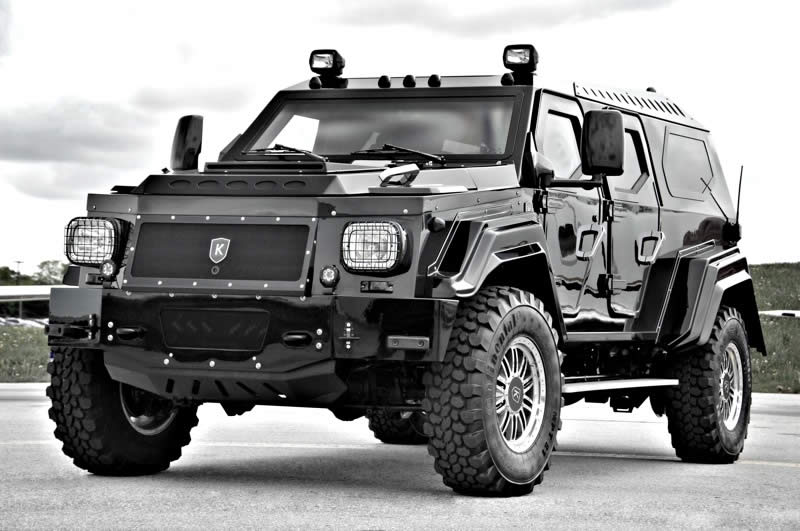
Photo: Conquest Vehicles
The Knight XV from Conquest Vehicles is a top-of-the-line, ultra-luxurious armored SUV. It’s made to take on big threats on the road and survive over and over again. If you live in the city, then this urban assault SUV might be the best bug out vehicle for you.
Some things we love about the Knight XV:
- Has great security features like night vision cameras, external smoke screens, run flat tires, and thick armor.
- Spacious interiors.
Things that might turn you away from the Knight XV:
- Pretty expensive.
- Doesn’t have that many sustainable features pre-built.
- A limited number of units available.
Sportsmobile Classic 4×4

Photo: Sports Mobile
Think a repairman’s cargo truck turned into a dependable BOV, and you’ve got the Sportsmobile Classic 4×4. This BOV has a Ford Cutaway body built with a fiberglass shell, steel reinforced for a streamlined look. As for the technical side, just know that this build is no joke. It’s one of the best bug out vehicles for a reason.
Some things we love about the Sportsmobile Classic 4×4:
- It has well-thought-out living quarters.
- Built for that off-grid van life and offroad terrain.
- Beefed up with a lot of quality parts and accessories.
Things that might turn you away from the Sportsmobile Classic 4×4:
- Looks like a repairman’s truck.
- It might stand out on the streets.
- It might have trouble on some off-road trails due to its size.
Final Thoughts
Whatever you choose, pick the best bug out vehicle that fits your needs. Whether you get a secondhand one or a brand-new vehicle, remember to plan everything down to a T to make the most of your chosen BOV.
What do you think? Let us know in the comments section below!
Source link: https://www.tactical.com/best-bug-out-vehicles-2021/ by Jay V. at www.tactical.com
Prepping
How to Pack a Bug Out Bag List That Could Save Your Life

Did you know you can survive only three days without water, but up to a week without food? This stark reality highlights why a comprehensive bug-out bag list is essential for emergency preparedness.
When disaster strikes, having the right supplies ready can mean the difference between safety and serious risk. According to the American Red Cross, we should prepare for at least 3 days of supplies for evacuation scenarios and 2 weeks’ worth for home emergencies. Additionally, about half of all Americans take daily prescription medications – items easily forgotten during urgent evacuations.
A properly stocked bug out bag contains much more than basics. Water purification tools, non-perishable food, first aid supplies, and shelter items form your foundation. However, personal items like prescription medications, important documents, and hygiene products are equally crucial for both comfort and survival.
Whether you’re new to emergency preparedness or an experienced survivalist, this guide will walk you through creating a practical, comprehensive bug out bag that meets your specific needs. Let’s ensure you’re ready for whatever comes your way!
Essential Gear for Every Bug Out Bag
“A bug out bag essentials list should have items to prepare you for a roadside emergency, a natural disaster, or even something more severe like a ballistic threat.” — Premier Body Armor, Leading provider of body armor and emergency preparedness equipment
Preparing for emergencies starts with gathering the right supplies in your bug out bag. These essential items form the core of any survival kit, regardless of your experience level.
Water and purification tools

Access to clean water is your top survival priority. Include a durable stainless steel water bottle (approximately 32oz) that can also be used for boiling water if needed. Pair this with a reliable water filter like the Sawyer Mini which can filter up to 100,000 gallons of water or a LifeStraw that filters up to 1,000 liters. Water purification tablets such as Potable Aqua provide backup when filters aren’t accessible.
Non-perishable food and utensils
Pack high-calorie, lightweight food options that require minimal preparation. Energy-dense choices include:
Ration bars and protein bars (high in calories and compact)
Beef jerky (protein-rich with long shelf life)
Freeze-dried meals like Mountain House (just add water)
MREs (Meals Ready to Eat) for complete nutrition
Include a spoon and a manual can opener for accessing canned foods.
First aid kit and medications

A comprehensive first aid kit should contain items for treating both minor injuries and serious trauma. Essential components include a tourniquet, pressure dressings, z-fold gauze, trauma shears, and various medications. Pack common over-the-counter medications like ibuprofen, acetaminophen, antihistamines, and anti-diarrheal medicine. Furthermore, include any prescription medications your family needs.
Flashlight, batteries, and radio
Reliable lighting is crucial after dark. Pack a quality LED flashlight or headlamp with extra batteries. Additionally, include an emergency radio—preferably one with multiple power sources like solar, hand-crank, or batteries—to stay informed during disasters.
Multi-tool and manual can opener

A quality multi-tool serves countless functions in emergencies. The Leatherman Signal stands out with 19 tools, including pliers, knife, saw, hammer, whistle, and even a ferro rod for starting fires. This versatility makes it invaluable for survival situations.
Shelter items: tarp, sleeping bag, and clothing
Protection from the elements is essential for survival. Pack a waterproof tarp or emergency survival tent made of heat-reflecting Mylar. Include a compact sleeping bag or emergency bivy suitable for your climate. For clothing, focus on durable, natural fiber garments in dark, subdued colors. Essentially, pack layers appropriate for your region, quality hiking boots, and multiple pairs of socks.
Personal Items to Customize Your Bug Out Bag

Beyond the standard essentials, a truly effective bug out bag requires personalization based on your specific needs. These customized items often make the difference between basic survival and maintaining health and comfort during emergencies.
Prescription medications and glasses
Your survival may depend on access to critical medications. Store a week’s supply in your bug out bag, rotating them regularly to prevent expiration. For medications requiring refrigeration like insulin, pack all supporting supplies (glucometer, alcohol preps, syringes) and be prepared to grab the medication itself when needed. Additionally, include a backup pair of glasses rather than contact lenses, since contacts require cleaning solutions and can be problematic in dusty conditions.
Baby and pet supplies

For infants, pack diapers, wipes, formula, bottles, and baby food. Pet owners should include a three-day supply of pet food and water, collapsible bowls, an extra collar with ID tags, a leash, medications, vaccination records, and waste disposal supplies. A small comfort item or toy can help reduce stress for both babies and pets.
Important documents and cash
Store copies of crucial documents in waterproof, portable containers. These should include identification (driver’s license, passports), insurance policies, property deeds, medical records, prescription lists, and contact information for doctors. Pack some cash in small denominations since ATMs and credit card systems may be unavailable during emergencies.
Hygiene products and feminine supplies
Basic hygiene prevents disease during emergencies. Include a toothbrush, toothpaste, soap, hand sanitizer, toilet paper, and compressed towels. Women should pack adequate feminine hygiene products. Personal hygiene kits specifically designed for emergency situations offer compact, lightweight solutions.
Entertainment for kids
Children need distraction during stressful situations. Pack small games, cards, notebooks with pens/markers, comfort items like stuffed animals, and familiar books. Research shows that play protects children from the negative impacts of stress and helps them process difficult emotions.
Extra keys and local maps

Include duplicate house and car keys to prevent lockouts. Physical maps of your local area and evacuation routes remain functional when GPS and phone navigation fail. Mark important locations like hospitals, shelters, and family meeting points.
How to Store and Maintain Your Bug Out Bag
Creating a bug out bag is only half the battle – knowing where to store it and how to maintain it completes your emergency preparedness strategy. Let me share practical advice on keeping your survival kit accessible and ready for action.
Where to keep your bag: home, car, work
Strategic placement of your bug out bag ensures quick access during emergencies. Store your primary bag near home exits or in your bedroom closet so you can grab it without searching. For comprehensive coverage, maintain multiple bags:
Home: Keep your main bug out bag in a designated spot known to all family members, ready for quick evacuation.
Work: Prepare a smaller kit with 24-hour essentials, including food, water, medications, and comfortable walking shoes in a “grab and go” case.
Car: Store an emergency kit in your vehicle for situations where you might get stranded or need to evacuate directly from work.
How often to check and replace items
Survival gear requires regular maintenance to remain effective. Update and rotate your bug out bag contents at least twice a year. Replace expired food items, check medication dates, and swap clothing for appropriate seasons.
For food specifically:
Store canned goods in cool, dry places
Keep boxed food in sealed plastic or metal containers
Mark rotation dates on containers without expiration dates
Replace water supplies at least every six months
Tips for organizing your gear
Efficient organization helps locate items quickly during emergencies. Consider these approaches:
- Compartmentalize by function – Group items into dedicated kits (fire-making, first aid, cooking) using stuff sacks or packing cubes.
- Modular approach – Create mini-survival kits within your larger bag to distribute weight or leave behind non-essentials if traveling on foot becomes necessary.
- Strategic placement – Store heaviest containers closest to your spine for better weight distribution, while keeping frequently used items in outer pockets for quick access.
Labeling and waterproofing essentials
Protect your supplies from water damage through proper waterproofing. Invest in waterproof bags, pack covers, or even quality garbage bags. Store electronics, fire-making tools, important documents, and medications in waterproof containers.
For quick identification, use color-coded stuff sacks or clear waterproof bags that allow you to see contents without unpacking everything. Consider removing essential pouches like your first aid kit for faster access during emergencies.
Practice locating items in your bag periodically, even in the dark, to ensure you can find critical supplies when needed most.
Planning Ahead: What to Do Before You Bug Out
“Make sure the wife’s and kids’ bags aren’t too heavy! Strive for 25 lbs or less.” — Bug Out Bag Builder, Emergency preparedness and survival expert organization
Even with a perfectly packed bug out bag, your safety depends on what you do before emergencies strike. Careful
planning transforms your bug out bag from a collection of items into a true lifesaving tool. Create a family emergency plan
Establish a comprehensive strategy with your household about how to respond during emergencies. First, choose two meeting locations—one just outside your home for sudden evacuations like fires, and another outside your neighborhood if you cannot return home. Moreover, designate an out-of-area emergency contact person since long-distance calls may work when local lines are overloaded.
Assign specific responsibilities to each family member and ensure everyone understands their role. Children should memorize important contact information, and schools or daycare centers should have these details on file.
Know your evacuation routes
Familiarize yourself with multiple evacuation paths from your home, work, and other frequent locations. Plot alternate routes on maps in case primary roads become impassable. Additionally, identify several potential destinations in different directions, such as friends’ homes or hotels.
For those with vehicles, maintain at least a half tank of gas at all times, as gas stations may close during emergencies. Those without personal transportation should coordinate with family, friends, or local emergency management offices about available resources.
Practice using your gear
Theoretical knowledge fails without practical application. Conduct home evacuation drills twice yearly, actually grabbing your bug out bag just as you would during a real emergency. Subsequently, drive your planned evacuation routes to ensure familiarity.
Test all equipment regularly, especially items requiring technical knowledge like water filters or emergency radios. Replace stored water every three months and food every six months.
Stay informed with alerts and updates
Register for emergency notification systems in your area. The Emergency Alert System (EAS) and Wireless Emergency Alerts (WEAs) deliver critical information during emergencies. Furthermore, WEAs are not affected by network congestion and will reach your mobile device even when regular text messages cannot.
Download the FEMA App for real-time weather alerts, shelter locations, and preparedness strategies. Nevertheless, maintain a battery-powered radio as backup for receiving information when power and cellular networks fail.
Conclusion
Throughout this guide, we’ve covered everything you need to create a potentially life-saving bug out bag. Above all, remember that emergency preparedness isn’t just about collecting gear—it’s about thoughtful planning and regular maintenance.
A properly stocked bug out bag serves as your lifeline during unexpected disasters. Nevertheless, its effectiveness depends entirely on your attention to detail. From essential supplies like water purification tools and non-perishable food to personalized items such as prescription medications and important documents, each component plays a vital role in your survival strategy.
Consequently, you must check your bug out bag regularly, replacing expired items and updating contents based on seasonal changes. Similarly, practicing with your gear beforehand ensures you’ll know exactly how to use everything when seconds count.
During emergencies, your family’s safety often hinges on preparation completed months earlier. Therefore, take time now to establish meeting locations, memorize evacuation routes, and create communication plans. Additionally, consider creating smaller specialized kits for your workplace and vehicle to ensure comprehensive coverage regardless of where disaster strikes.
Beginners should start with the core essentials outlined in this guide, while experienced survivalists can focus on optimizing weight distribution and adding specialized tools based on regional threats. Regardless of your experience level, the time to prepare is undoubtedly before warnings appear.
Start building or updating your bug out bag today—your future self will certainly thank you when the unexpected occurs. Because when disaster strikes without warning, the difference between readiness and regret often comes down to the preparations you’ve made in advance.
References
[1] – https://www.bugoutbagbuilder.com/learning-tutorials/bag-organization
[2] – https://www.ready.gov/be-informed
[4] – https://theprepared.com/bug-out-bags/guides/first-aid-kit-list/
[5] – https://trueprepper.com/kits/first-aid-kit/
[7] – https://trueprepper.com/best-survival-multitool/
[8] – https://survivalstoic.com/best-survival-multitools/
[9] – https://unchartedsupplyco.com/blogs/news/bug-out-bag-checklist?
[10] – https://thereadystore.com/blogs/article/what-type-of-clothes-to-pack-in-your-72-hour-kit
[11] – https://neverastray.com/2021/08/17/best-maps-for-preppers
[12] – https://swiftsilentdeadly.com/preparedness-a-realistic-bug-out-bag/
[13] – https://www.bugoutbagbuilder.com/learning-tutorials/bug-out-bag
[14] – https://www.diamondpet.com/blog/health/safety/go-bag-for-pets/
[15] – https://www.ready.gov/kit
[17] – https://moreprepared.com/collections/personal-hygiene
[18] – https://preparednessmama.com/emergency-entertainment-kits/
[19] – https://www.unicef.org/supply/unicefs-recreation-kit
[20] – https://www.quora.com/Where-is-a-good-place-to-keep-my-emergency-preparedness-bag
[21] – https://www.casualpreppers.com/single-post/building-a-better-bug-out-bag-tips-and-tricks
[22] – https://www.sthelensoregon.gov/dwff/page/preparing-your-bug-out-kit-or-go-bag
[23] – https://bugoutbagacademy.com/how-to-organize-your-bug-out-bag/
[24] – https://www.ready.gov/evacuation
[25] – https://www.cdph.ca.gov/Programs/EPO/Pages/develop_family_disaster_plan.aspx
[26] – https://www.fcc.gov/emergency-alert-system
[27] – https://www.ready.gov/alerts
Featured
Prepping Costs: Why It’s Not One-Size-Fits-All

Ask ten preppers what it costs to be ready, and you’ll get ten different answers—sometimes radically different. That’s because the price of preparedness is shaped by context: where you live, how you live, what you already have, and how long you’re planning to go without outside support.
A rural homesteader with a well, wood heat, and canning know-how is practically living in a state of soft prep by default. But for someone in a northern suburb who relies entirely on electricity, city water, and store-bought food, it’s a different story. When everything is dependent on infrastructure that can vanish in a storm, outage, or larger catastrophe, the path to self-reliance gets steep—and expensive.
The Hidden Expenses of Suburban Preparedness
Starting from scratch in a grid-dependent home means every contingency costs something. Take cooking, for example. If you have an electric stove, you’ll need an off-grid alternative. That might mean a generator and enough fuel to run it—until you realize storing large amounts of gasoline is dangerous, short-term, and unstable without stabilizers. Propane might offer a safer, longer-term solution, but the costs add up quickly with tanks, heaters, and specialized stoves.
Heating is an even greater concern. In colder climates, it’s not just about comfort—it’s about survival. Fireplaces help, but they’re rarely efficient. Retrofitting a home with a wood stove or investing in portable propane heaters, plus the fuel to run them, can run into the thousands. And if you thought solar would solve the problem, you might find yourself underwhelmed by how much sun your backyard doesn’t get—especially in winter.
In short, there’s no cheap way to maintain modern comfort without the grid. You can strip it down to essentials—just enough heat to keep pipes from bursting, just enough energy to boil water—but even that comes at a cost.
Six Months of Food Isn’t Just a Grocery Run

Food storage might be the biggest psychological hurdle for new preppers. It’s easy to stash a few extra cans. It’s much harder to build up six months of shelf-stable calories with nutritional variety, storage gear, and rotation plans.
Prepackaged long-term food kits offer convenience but are often overpriced for what you get. Bulk staples like rice, beans, oats, soy, powdered eggs, and freeze-dried vegetables are more cost-effective, but they demand infrastructure: buckets, mylar bags, oxygen absorbers, and the space to store it all. Then there’s the learning curve—how to cook with it, how to make it palatable, and how to plan meals that meet actual dietary needs over time.
You’re not just feeding people. You’re feeding them under stress, with no access to fresh food, and possibly no refrigeration or running water. That changes the equation completely.
Water: Storage, Filtration, and the Weight of Reality
Water is one of the easiest preps to overlook—and one of the most critical. Having a few jugs in the pantry is a good start for short-term disruptions. But once you move into long-term territory, the sheer volume required becomes staggering.
Large-capacity solutions like IBC totes, rain barrels, or water bladders can make a difference but come with their own challenges: space, weight, freeze risk, and the need for purification. Water treatment chemicals and filters are relatively inexpensive, but hauling water from a nearby source during winter is no small task. And depending on your location, that nearby stream might not even exist.
The Problem with “Buy Your Way Out” Prepping

For people with disposable income, it’s tempting to throw money at preparedness. Just grab a list, buy the gear, and stack the buckets. But prepping isn’t plug-and-play. Mistakes are expensive. Buying the wrong solar setup for a shaded yard, investing in a wood stove that can’t be legally installed, or stocking food that no one in your household will eat—these are the kinds of errors that cost hundreds or thousands of dollars.
Real preparedness isn’t built in a day, and it’s not built just by spending money. It’s built through trial and error, seasonal testing, and learning to live with the systems you create. Buying a generator is easy. Managing fuel rotation and maintenance is a different matter.
Budget Prepping: What Most People Actually Need
Not everyone needs to be ready for six months of total collapse. For many, a two- to four-week plan is enough to ride out natural disasters, civil unrest, or supply chain issues. That kind of prep is far more accessible—and affordable.
A deep pantry stocked with foods you already eat, a water filter and stored jugs, backup heat for one room, a camp stove or grill with fuel, and a well-stocked first aid kit—these are manageable goals that won’t break most budgets.
Going further than that becomes a question of time, tradeoffs, and priorities. It doesn’t have to be a $10,000 sprint. It can be a slow build: a few cans at a time, one piece of gear per month, skills learned for free online or through local classes. The point is consistency, not perfection.
Final Thoughts: Prepping Is a Spectrum, Not a Status

Prepping isn’t about hitting some magic checklist and calling it done. It’s about becoming harder to kill when systems fail—and that process looks different for everyone. Some will have the money to do it fast. Others will take the slow, steady route. Some will focus on tools, others on skills.
What matters most is understanding the stakes. For the tens of millions of people already living on the edge—financially, logistically, nutritionally—prepping isn’t just harder, it’s often impossible without community and strategy.
If the only voices talking about preparedness are the ones with $10,000 worth of gear in their garage, the people most likely to need prepping will assume it’s not for them. And that’s a mistake none of us can afford.
Featured
Pack Light, Live Smart: The Minimalist’s Go Bag for Real People

There’s a certain fantasy in the prepping world: one backpack, one mission, one badass loner disappearing into the woods with nothing but a knife, a tarp, and the will to survive. For most people, that’s just not realistic. We’ve got families, jobs, obligations—and we’re not all 25-year-old Navy SEALs in peak condition. That’s where the minimalist bug-out bag comes in. This isn’t about stripping things down to bare survival. It’s about packing smart, packing light, and still having everything you need to make it through the first 72 hours.
The reality is that the average bug-out scenario isn’t some extended wilderness trek. More often, it’s a temporary displacement: a wildfire, a chemical spill, or a civil disturbance that forces you to leave home fast. You might be in your car. You might end up in a shelter. You’re not trying to win Alone, you’re trying to stay alive, safe, and functional until things stabilize or you can regroup.
Start with the Mission, Not the Gear

Before you pack anything, ask yourself: What are you actually preparing for? Are you bugging out for a few days due to a local emergency? Escaping civil unrest? Evacuating due to a hurricane warning? Each of these changes what you need to carry, how far you might need to go, and how much weight you can realistically manage.
Most people think more gear equals more security. In truth, the heavier your pack, the slower you move, the faster you fatigue, and the greater your risk of injury or failure. The best bug-out bag is the one you can actually carry, not the one that looks great in a YouTube video. Weight is your enemy. Bulk is your enemy. Complexity is your enemy.
Every ounce in your bag should earn its place. That means prioritizing multi-use tools, compact essentials, and items that help you solve multiple problems. A lighter bag doesn’t just make you faster—it makes you mentally sharper, less exhausted, and more adaptable.
The Essentials: Less but Smarter
So what does a minimalist go-bag look like? The core categories don’t change: water, food, shelter, clothing, medical, and defense. What changes is how you approach them.
- Water: Instead of packing gallons of water, carry a compact water filter and purification tablets. A lightweight, stainless steel bottle can double as a cooking pot. One Nalgene. One Sawyer filter. Done.
- Food: Think calorie-dense, shelf-stable, and no-cook. Protein bars, nuts, jerky, dehydrated meals you can eat cold if needed. You don’t need a full camp kitchen—you need fuel.
- Shelter: A lightweight tarp and paracord beats a bulky tent. Emergency bivvies or space blankets are light, cheap, and effective. Shelter isn’t comfort—it’s protection from exposure.
- Clothing: One change of clothes. Layerable, weather-appropriate, and quick-drying. Merino wool socks, thermal base layers, a hat, gloves, and a poncho or rain jacket. That’s it.
- Medical: Focus on trauma and basics. A compact IFAK with tourniquet, clotting agent, and pressure bandage. Add band-aids, antiseptic wipes, painkillers, and any prescriptions.
- Defense: Pepper spray, a knife or multitool, and if you’re trained and legally cleared—firearms. But this isn’t a war bag. It’s about deterrence and survival.
Practical Gear That Earns Its Keep

Your tools matter—but only if they work under pressure and solve real problems. A headlamp with extra batteries. A lighter and ferro rod. A compact power bank. A physical map of your region. Nothing fancy. Everything tested.
One of the most overlooked items? A small notebook and pen. In an emergency, being able to write down addresses, instructions or leave a message can be crucial.
And don’t forget morale. One small comfort item—a photo, a book, a pocket Bible—can help keep your head straight when everything’s upside down.
Your bag itself? Look for durability and organization, not size. 25-35 liters is enough. MOLLE webbing is great. A chest strap and hip belt go a long way for comfort.
Practice Makes Practical

The smartest pack in the world won’t help you if you’ve never used it. Know what’s in your bag and how to use it. Repack it every few months. Practice walking a mile or two with it. Do a dry run where you use it for a day—cook, drink, navigate, sleep.
If something breaks, replace it. If something never gets used, ask why it’s in there. Your go-bag should evolve over time, not gather dust.
Minimalism isn’t about deprivation. It’s about intentionality. You’re not ditching essentials—you’re ditching illusions. In a real emergency, you’ll be thankful for every ounce you didn’t carry that lets you move faster, think clearer, and act decisively.
Less Gear. More Prepared.
The minimalist bug-out bag isn’t for everyone. But for real people—working adults, parents, older preppers, people who can’t carry 50 pounds uphill both ways—it’s a lifeline. Thoughtful. Lightweight. Fast.
When the clock is ticking and the world feels like it’s tilting off its axis, you don’t need the biggest pack. You need the smartest one.
Plan smart. Pack light. Stay sharp.


Survival 101: Building Your First Emergency Kit

How to Pack a Bug Out Bag List That Could Save Your Life

Urban Survival Tactics for 2025: What Preppers Need to Know About Civil Unrest and AI Surveillance

The One-Day Prepper Pantry: Build a 30-Day Food Plan in One Afternoon